


SKU:1753673
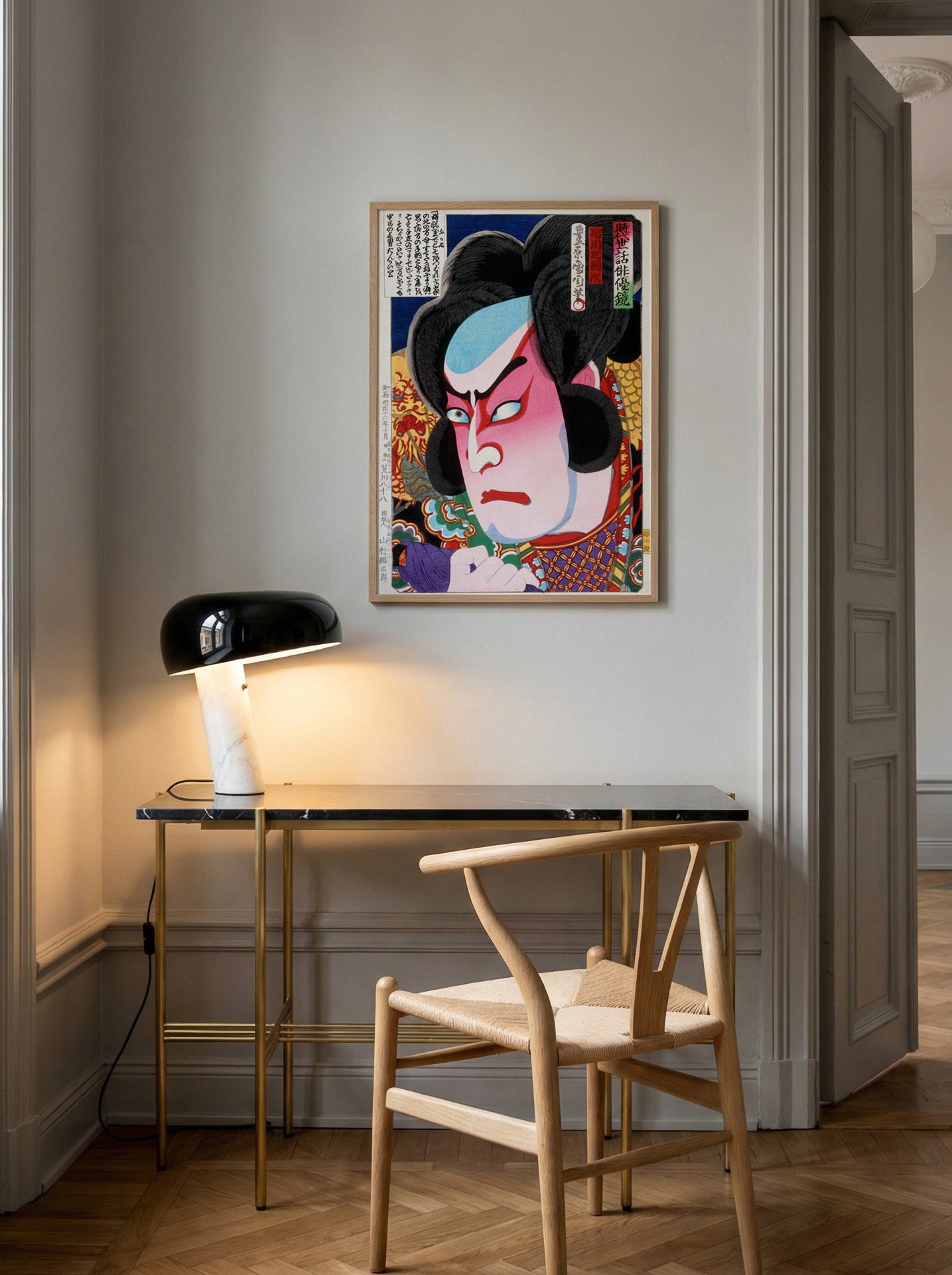
Poster: The Actor Ichikawa Sadanji I as Fukashichi (1883)
Poster: The Actor Ichikawa Sadanji I as Fukashichi (1883)
Regular price
142 kr
Regular price
Sale price
142 kr
Unit price
per
Couldn't load pickup availability
Secure payments
- 30-day return right
- Shipped in 1-4 working days
- Quick support available

Museum-quality print
230 g/m² paper with matte finish.
Shipping & Production
Shipping & Production
This poster is produced for you within 2-4 days of your order. Production, packaging, and preparation typically take 1-5 business days before your order ships out.
Shipping times for posters:
EU: 2-5 days
UK: 2-6 days
US & CA: 3-6 days
Rest of the world: 4-9 days
Please note this is an estimate of business days and exclude weekends and holidays.
Material information
Material information
- Textured matte surface, 230 g/m2 paper (archival-grade)
- Museum-quality giclée printing technology
- Handmade wooden frames from Italy with premium plexiglass in different colors
- Acid- and lignin-free and made to last

About this print
This 1883 poster by Toyohara Kunichika is a striking example of late 19th-century ukiyo-e theatre portraiture, depicting the celebrated Kabuki actor Ichikawa Sadanji I in the role of Fukashichi. Created during the Meiji period, the print reflects both the persistence of Edo-period artistic traditions and the evolving modern sensibility of the time.
Ichikawa Sadanji I (1842–1904) was one of the most important Kabuki actors of his era. Known for his powerful stage presence and expressive realism, he helped modernize Kabuki acting during Japan’s rapid Westernization in the Meiji period.
The character Fukashichi is typically associated with dramatic Kabuki narratives involving loyalty, moral conflict, or emotional intensity—roles that allowed actors like Sadanji to demonstrate psychological depth.
Kunichika’s actor portraits (yakusha-e) were often produced to promote specific theatre performances in Edo (Tokyo). These prints functioned much like modern theatrical posters or celebrity photographs.
The print showcases the transition period between classical Edo aesthetics and modern Meiji influences. It represents one of the last major phases of ukiyo-e before its decline as a commercial medium.
— SVEA Studio